United Parcel Service said Tuesday it has completed the second-phase deployment of radio frequency identification package sensing technology across its small package network, boosting productivity by eliminating the need for handheld scans and giving shippers better ability to closely track the status of parcels from drop-off to delivery.
RFID sensors are now installed in all UPS (NYSE: UPS) package delivery vehicles in the United States, in delivery stations and on every package shipped through more than 5,500 UPS Store locations, including on customer returns, according to a news release. Technology to print RFID labels was deployed to all UPS Stores by the end of 2025, the company previously said.
UPS has been using RFID for certain high-value products and pharmaceutical shipments for several years, but has now become the first major logistics provider to roll out RFID technology at scale across an integrated network.
The Atlanta-based logistics provider has invested more than $100 million to develop and implement RFID and plans to continue expanding the system. Later this year, the company will begin equipping regional sortation hubs, bringing RFID tracking capability to the middle mile, officials say. Aircraft will also eventually be equipped with RFID sensors.
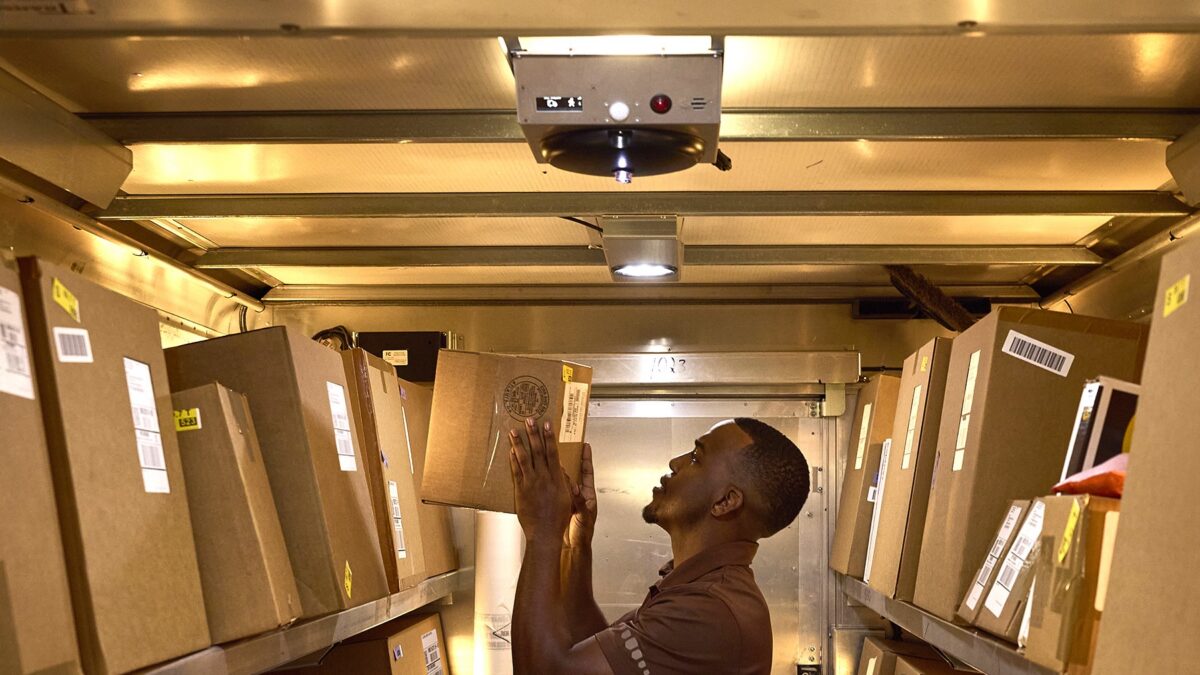
Executives have previously estimated the technology would eliminate 20 million manual scans per day for workers loading package cars.
The RFID investment is part of UPS’s multiyear transformation initiative, called Network of the Future, which involves shrinking the ground delivery footprint and automating remaining facilities to maintain volume throughput and service levels.
UPS began its so-called “smart package” RFID initiative at about 100 facilities in 2022. UPS completed the RFID rollout across U.S. facilities in mid-2023 and subsequently began to equip package cars with RFID readers.
In addition to The UPS Store, RFID labels are currently being printed at final-mile package facilities for packages that haven’t been tagged further upstream. Misloads have dropped by nearly 70% since UPS started using the technology three years ago, according to the company.
“We’re lighting up customers’ supply chains in real time with RFID, enabling precise tracking, faster insights, a smarter network and smarter packages,” said Matt Guffey, chief commercial and strategy officer, in the announcement. “This is the most significant visibility advancement in the past decade at UPS and in our industry.”
The shipping industry has relied on scanners for nearly three decades. By evolving from scanning to sensing technology, costumes will get precise visibility during the entire package journey. Automatic sensing reduces errors, giving UPS and customers actionable and predictable information much earlier in the process, UPS said.
RFID sensors in vehicles confirm packages have been loaded and are in UPS’s possession. They automatically sense packages as they move through the network, allowing the carrier to respond faster to weather changes or other unexpected events.
During the company’s fourth-quarter earnings call on Jan. 27, CEO Carol Tomé said the next pillar of the RFID strategy is smart fulfillment, defined as “putting the RFID labeling at the point of origin, which gives better transparency order to cash.” UPS Stores are processing 1.3 million packages a day with RFID labeling,“allowing us to earn new commercial business,” she said.
Rival FedEx also has developed sophisticated tracking technologies for high-value shipments that require constant monitoring. The FedEx Surround system uses bluetooth technology and WiFi to read labels with sensors hundreds of times during the shipping process. The company has recently outlined ambitious IT initiatives to expand shipment tracking capabilities across all packages using a variety of sensors and analytics technology.
Click here for more FreightWaves/American Shipper stories by Eric Kulisch.
Write to Eric Kulisch at ekulisch@freightwaves.com.
RELATED STORIES:
FedEx CFO John Dietrich resigns
Amazon to scale up drone delivery in 2026, CEO says
The post UPS expands deployment of automated package sensors to improve tracking appeared first on FreightWaves.