The betting odds on the newly elected MP for Makerfield, Andy Burnham, to become UK Prime Minister are now so short it’s hardly worth punting on. But for Britain’s bookmakers’, a change in leadership comes with a lot more to consider than just trading.
Prime Minister Keir Starmer’s resignation was announced this morning, coincidentally after Burnham, the Mayor of Greater Manchester, won 55% of the vote in a by-election in Makerfield last week – breaking records on the Betfair Exchange with £2.2m matched on the vote.
The vote, and the events that have followed, have hammered home the niche popularity of political betting markets in the UK. It has also shone a spotlight on just how significant politics is for the betting industry right now though, with taxes, advertising, stocks and market fluctuations all key things for companies to keep in mind.
What odds do the bookies give Burnham?…
To answer our own question almost immediately here, the bookies are giving Burnham pretty good odds. As I wrote above, punters who fancy a shot on the next PM have missed by at least a couple of weeks, if not months.
Over 81% of users on the Flutter Entertainment-owned company’s Betfair Predicts expect Burnham to be elected Labour leader – also suggesting that he’ll run unopposed.
A huge 98% expect Burnham to be the next Prime Minister. The fact that one of his major rivals, former Health Secretary Wes Streeting, has lowered his ambitions and is now backing the former Mayor has definitely helped Burnham’s case.
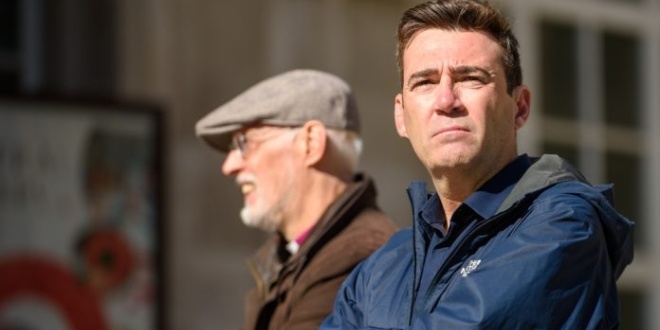
Add to this the speculation that Streeting could soon become the next Chancellor of the Exchequer and it might explain why Streeting has suddenly thrown his weight behind the North West MP.
Sam Rosbottom, Betfair Spokesperson, said: “As the dust settles on Sir Keir Starmer’s premiership, Labour are looking for a new leader, and punters are very confident that Andy Burnham will be moving into Number 10, with Betfair Predicts giving him a 98% chance of becoming the next Prime Minister.
“However, will the moving vans be there in July or September? That question is likely to be answered when nominations for the party’s new leader open on 9th July. Can any other Labour MP muster enough support to contest the new Makerfield MP?
“With former health secretary, Wes Streeting, announcing that he will back Burnham, it is looking more and more likely that we will see a coronation, there’s an 81% chance that this is the case.”
…and what are the odds for Labour?
According to Star Sports, Burnham’s chances of success go way beyond the upcoming Labour party leadership battle.
Labour has been fighting a losing battle against the new face of British right-wing politics this year, Reform UK. The party has been overtaken by Nigel Farage’s populist party in various opinion polls this year, and was dealt a huge blow in the May local elections.
Star Sports’ odds give Labour a fighting chance, however.
The bookmaker gives the governing party a 13/8 shot of winning the most seats at the next general election, coming narrowly ahead of Reform at 2/1, Kemi Badenoch’s Conservatives at 11/2, and Rupert Lowe’s hard-right upstarts of Restore Britain at 13/2.
A UK general election must be held no later than 15 August 2029, though the government can call one anytime – something that Star Sports expects to happen in the coming months, with the odds of a 2027 election shortening from 11/2 to 7/2 in the days since Burnham’s Makerfield win.
However, the bookmaker also expects the UK to continue heading towards a multi-party system, similar to that seen in countries like the Republic of Ireland and the Netherlands, with odds of 8/5 that no party will win an outright majority in the UK’s next election – meaning an uneasy coalition of different parties.
“Following the sudden resignation of Prime Minister Keir Starmer this morning, a General Election next year looks more and more likely,” said Flynn Goward, Star Sports Managing Director.
“We had a 2027 General Election priced at 11/2 late last week and that shortened into 7/2 over the weekend, but with Starmer on his way out of Downing Street, it’s now just 11/4 that the nation will head to the polls next year.
“Labour head the betting to win most seats at the next General Election at 13/8, but they’re not far clear of Nigel Farage’s Reform (2/1), and it’s odds-on at 8/15 that no party wins a clear majority, with the political landscape changing once again this morning.”
Burnham and the bookies
With the odds out of the way, let’s get down to business – what will operators be hoping for from a Burnham government? What can they expect?
New leadership in Downing Street likely means new leadership in the Treasury, which has been headed by Rachel Reeves as Chancellor of the Exchequer ever since Labour’s landslide election win in July 2024.
Under Starmer and Reeves, the online gambling industry has been subject to new, heavy taxes as the duo sought to fund Labour’s extensive economic investment plans and pave for a way to slash the two-child cap on child benefit allowances.
In April this year, the Remote Gaming Duty (RGD) on online gambling – though crucially, not sports betting – went up from 21% to 40%. General Betting Duty (GBD) on gambling in general will go up from 15% to 25% in April next year, though retail betting and gaming and horse racing betting are excluded.
The impact will nonetheless be felt by any operator with a sizable online casino contribution, and so the industry may be hopeful that a new government will be more open to listening to their concerns. They are unlikely to find a sympathetic ear in Burnham, however.
As Mayor of Greater Manchester, Burnham has been a vocal supporter of tougher regulations on high street gaming, such as supporting Labour MP Dawn Butler’s campaign for the Aim to Permit ruling on advertising to be canned.
This is looking a likely prospect via the English Devolution and Community Empowerment Bill, and although politicians like Butler and Burnham seem much more concerned about Adult Gaming Centres (AGCs), high street betting shops could still be affected.
In the City
Another consideration is Burnham’s choice of Chancellor of the Exchequer.
The three likely candidates right now are the aforementioned Streeting, generally seen as being on the right of the Labour party and in the centre of the British political spectrum; the more left-leaning Ed Miliband; and incumbent Reeves, Burnham could decide to keep on.
Streeting quit his job as Health Secretary earlier this year with the intention of challenging Starmer. But since Burnham’s re-election as an MP, he has withdrawn his hat from the ring and put his support behind Burnham.
This has put in the running to become selected for the high-profile job of Chancellor, but former leader and 2015 PM hopeful Miliband remains a key figure within the party and his name is still thrown around in discussions as to who will run the Treasury.
For listed operators like Entain and evoke, the latter of which is in the midst of a takeover process, the choice of Miliband could be troubling.
Figures in the City of London’s finance world are wary of Miliband, with one investment strategist telling City AM he is viewed as having “a reputation of having priorities other than maximising growth within existing fiscal constraint”.
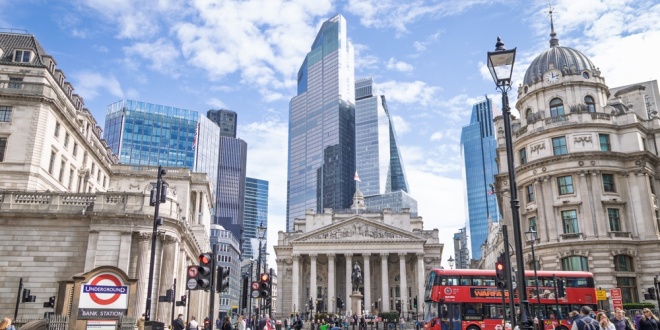
A choice of Miliband as Chancellor over retaining Reeves – who, despite the trouble the taxes are causing the gambling industry, is seen as a stabilising force in the City – or over the more business-friendly Streeting could cause some shock to the markets.
For the likes of Entain, evoke and Flutter, this could be very damaging, though the latter could escape any hypothetical market shocks if its planned delisting from the LSE on 31 July comes before Burnham’s cabinet is chosen.
Also delisting from London is evoke, though this will occur after it is acquired by Bally’s Intralot in either Q4 2026 or Q1 2027, by which time the UK will – hopefully – know who is PM in 10 Downing Street and Chancellor on No 11.
Nonetheless, with Entain, evoke and Flutter’s share prices all down from this time last year by 36.3% to 546p, 19% to 46p and 61.97% to 7,588p (at the time of writing), the last thing they all need is a shock to the markets via the appointment of an unpopular Chancellor.
Nominations for Labour Party leadership open on 9 July, and the leadership vote is scheduled for 16 July. However, if only one candidate chooses to stand, they will automatically become Labour leader.
A new leader needs to be chosen by the time parliament returns from summer recess on 1 September.