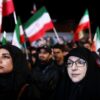
A world impatient for a come-down from President Donald Trump’s apocalyptic bluster breathed a sigh of relief Tuesday as the U.S. and Iran agreed to a two-week ceasefire, tempered with worry that the deal could bring new risks.
“Better TACO Tuesday than World War III,” said one European official, nodding to Trump backing off his threats to wipe out Iran’s civilization if it didn’t open the Strait of Hormuz. The official, who was not authorized to speak publicly, hoped the pause could allow for an eventual negotiated end to the war.
The announcement fell in the middle of the night in Europe and the Middle East and many U.S. allies were slow to make public statements about it. But the dramatic pause sparked some governments to issue immediate public praise.
Iraq’s foreign ministry said it welcomed the ceasefire and “values this development as a step that would contribute to reducing tensions, enhancing opportunities for de-escalation, and reinforcing security and stability in the region.”
Australia welcomed the agreement, saying it “wants to see the ceasefire upheld and a resolution to the conflict.” It noted that Iran’s closure of the Strait of Hormuz and attacks on shipping vessels and energy infrastructure had been roiling world markets, and called “on all parties” to uphold international law.
Pakistan, which led efforts to reach the ceasefire, was particularly optimistic that this is the turning point needed in the war.
“Both parties have displayed remarkable wisdom and understanding and have remained constructively engaged in furthering the cause of peace and stability,” Pakistani Prime Minister Shehbaz Sharif wrote on social media.
Still, the ceasefire appeared shaky in its early hours. After the White House said Israel had agreed to the ceasefire, an Israeli military official told the Associated Press the country was still attacking Iran. Both Israel and the United Arab Emirates warned of incoming missiles early Wednesday, local time.
The ceasefire came about just as NATO chief Mark Rutte was set to visit the White House Wednesday. Devastating U.S. strikes on Iran would have created a fractious atmosphere for the meeting and possibly a rupture as European allies have refused Trump’s demands to support the U.S. in its attacks on Iran.
Domestically, Trump’s deal has unnerved Iran hawks like Sen. Lindsey Graham (R-S.C.), who took to social media to put forward multiple pleas for a congressional review process on the deal, adding that he was “extremely cautious regarding what is fact vs. fiction or misrepresentation.”
Iran agreeing as part of the ceasefire to allow safe passage via the Strait of Hormuz for two weeks was a sign the U.S. was losing face, argued Nate Swanson, a former official who negotiated with Iran on behalf of the Trump administration last year.
“If you go back two months and you think the big U.S. gain is the Strait of Hormuz is open, it’s an incredibly ill-conceived adventure and Iran is in many ways stronger than they were before,” Swanson said. “It’s pretty sobering, but you could understand why the president made his decision.”
Still, White House spokesperson Karoline Leavitt described the ceasefire Tuesday as a “victory.”
“The success of our military created maximum leverage, allowing President Trump and the team to engage in tough negotiations that have now created an opening for a diplomatic solution and long-term peace,” Leavitt said. “Additionally, President Trump got the Strait of Hormuz reopened.” Tehran put forward a warring narrative, taking the opportunity to boast victory over the United States. Shortly after the ceasefire declaration, Iranian state media characterized the move as Trump’s “withdrawal,” writing that the U.S. president had “retreated.”
But after weeks of escalating attacks, culminating in Trump’s threat of civilizational erasure in Iran earlier on Tuesday, many U.S. allies will be looking with hope toward what Pakistan’s Sharif has dubbed the “Islamabad Talks” on Friday to wind down more than a month of war that has rocked the Middle East.
A statement from Israeli Prime Minister Benjamin Netanyahu in support of the ceasefire indicated the coming days’ negotiations may not be smooth.
Whereas Sharif had announced that the ceasefire meant the U.S. and Iran, “along with their allies, have agreed to an immediate ceasefire everywhere including Lebanon,” Netanyahu indicated the opposite.
“The two-weeks ceasefire does not include Lebanon,” he said.
Cheyenne Haslett contributed to this report.