Public comments on the CFTC’s prediction market proposal are piling in, with both institutions and retail users raising concerns over gambling, manipulation, and insider risk.
Earlier this year, the Commodity Futures Trading Commission (CFTC) sought public input on proposed rules for prediction markets, with early comments largely critical. Both institutional stakeholders and a growing wave of private citizens raised concerns about gambling, manipulation, and the public interest.
While the full dataset remains under review, a sample of submissions reviewed by Gambling Insider shows limited visible support and frequent repetition of opposition language—particularly in comments filed in early April.
Institutional Submissions Focus on Integrity, Legality, and Public Interest
Early submissions came from lawmakers, industry groups, academics, and legal experts.
The first submission was a letter from U.S. Senators Jack Reed (D-RI) and John Hickenlooper (D-CO), who emphasized that certain event contracts, particularly those for political events, raise serious concerns about manipulation and public trust in institutions.
Submissions by law firms and attorneys echoed those concerns. They questioned whether certain event contracts fall outside the intended scope of derivatives regulation and instead resemble gambling products offered to retail users.
A letter from the National Thoroughbred Racing Association (NTRA) argues that event contracts tied to horse racing would conflict with the Interstate Horseracing Act. The letter stated that these contracts “fall squarely within” categories that should be prohibited under the CFTC’s public interest authority.
NCAA President Charlie Baker sent a follow-up to his January letter to the CFTC, urging it to suspend collegiate-related event contracts. In his new submission, Baker warned of integrity and insider-trading risks, as well as the undermining of existing regulatory frameworks.
Academic commentary also questioned whether prediction markets serve a legitimate financial purpose.
In a submission to the Commission, Seton Hall law professor Ilya Beylin wrote that many contracts “overwhelmingly serve an entertainment purpose and lack appreciable utility for managing risk.” He added that their structure is “consistent with discretionary spending on entertainment… rather than risk management.”
Beylin further warned that certain contracts are “especially poor at managing risk” while being “subject to substantially heightened risks of manipulation as well as insider trading.”
Across submissions, a common thread emerges: skepticism that certain prediction market products meet the Commodity Exchange Act’s (CEA) public interest standard, particularly where they resemble gambling rather than risk-management tools.
Also Read: Senators Urge Selig, CFTC To Reiterate Ban on ‘Perverse’ Death Markets
Retail Comments Surge With Strong Anti-Gambling Sentiment
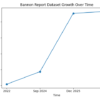
Before April 2, only 19 submissions had been filed. After that, the docket saw a sharp surge in comments from private citizens, reaching over 750 at the time of writing.
Some explicitly frame prediction markets as gambling. One commenter wrote:
“Prediction markets are gambling, pure and simple. Ban them.”
Others focused on integrity and insider risks. One submission warned that prediction markets “are uncharted territory and can affect market integrity.” They added:
“It is a given that this will be manipulated.”
A recurring concern across submissions is contracts tied to political or military outcomes.
“I respectfully submit that the Commission should explicitly prohibit event contracts related to military operations… and non-financial government policy decisions,” one commenter wrote. They added that such markets create “unacceptable risks” due to insider information.
Elsewhere, one commenter described prediction markets as “a dangerously addicting form of gambling.” They urged the CFTC to act to “protect the future generation.”
Repeated Language and Advocacy-Linked Submissions
A notable portion of the retail submissions reviewed contains identical wording, suggesting coordinated or template-driven responses.

Multiple commenters listed their organization as “More Perfect Union.” According to its website, the organization is “a nonprofit education, advocacy, and journalism organization dedicated to building power for the working class.”
While coordinated submissions are common in federal rulemakings, the repetition reinforces the direction of sentiment in the comments reviewed.
What the CFTC Wants to Know
The comments are in response to the CFTC’s Advance Notice of Proposed Rulemaking (ANPRM), which seeks public input on the regulation of event contracts under the CEA.
Key questions include:
- Do these contracts actually help businesses manage risk or understand market trends, or are they mainly for entertainment?
- How should regulators determine whether contracts are subject to manipulation or insider trading?
- What constitutes the “public interest” under the CEA when deciding whether these markets should be allowed?
- Do everyday users need more protection if they’re trading on these platforms?
- What rules should apply to things like funding accounts, settling trades, and monitoring for abuse?
The CFTC is also trying to decide how to distinguish between financial derivatives and products that resemble gambling—an issue at the center of ongoing litigation involving platforms such as Kalshi.
Also read: Does CFTC Advisory Portend Prediction Market-Sportsbook Co-Existence?
The post CFTC Prediction Market Comments Skew Negative as Retail Submissions Surge appeared first on Gambling Insider.